How a second choice can change the Best Picture race
Green Book and Parasite show that Directing and Best Picture can split or align. A twenty-ballot calculation explains how lower preferences can matter.
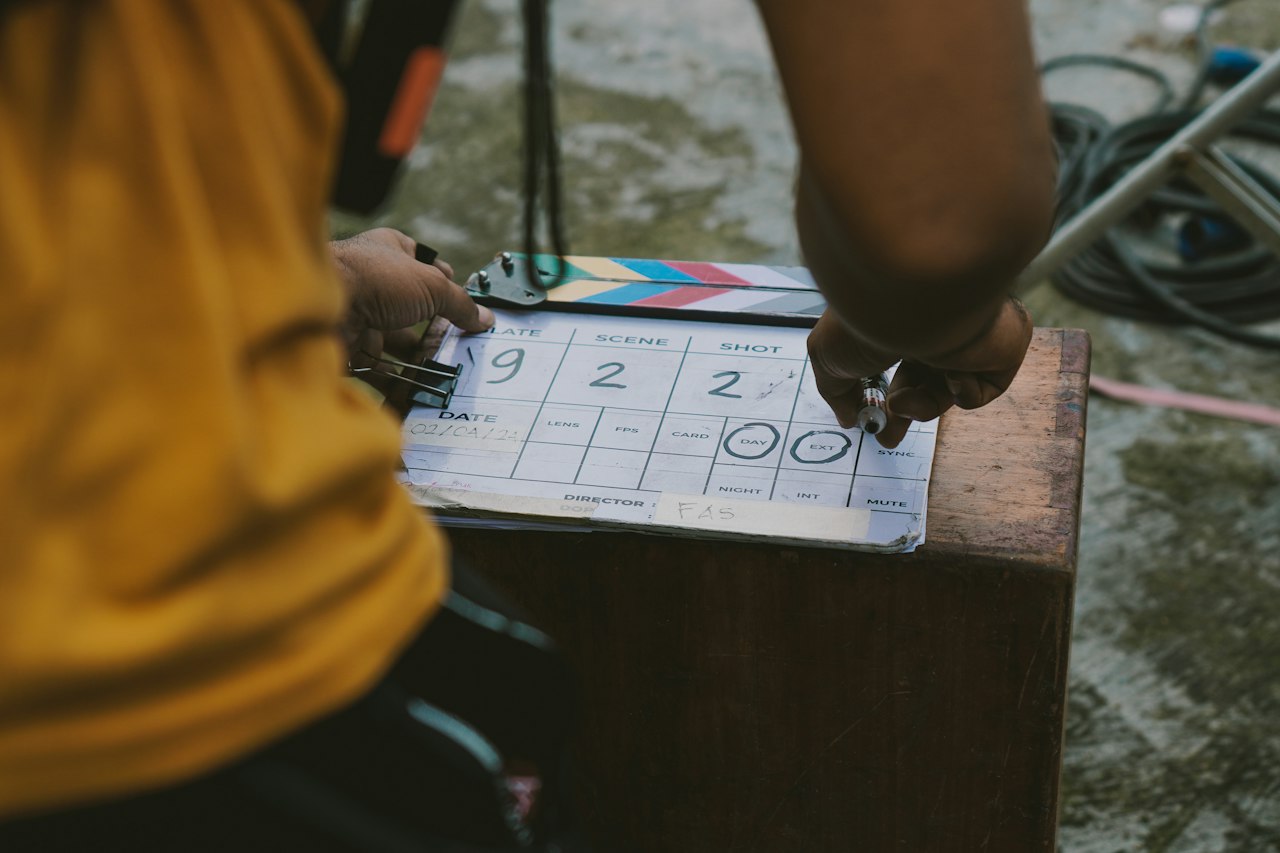
A cut can make a scene faster without making it clearer. A long hold can create tension—or simply leave a scene waiting for its next idea. That is why counting shots is such a blunt way to discuss Film Editing. The interesting question is what changes in the viewer's understanding when the film moves, pauses or withholds an image.
I start with the moment a scene turns. A face suddenly means something different; a sound places an unseen person nearby; two separate actions become one event. Following those discoveries gives us a way to talk about editing that works for a quiet conversation as well as an action sequence.
Watch a short scene without pausing. Write one sentence about the moment when its meaning changes: a character realizes a lie, a space becomes dangerous, or an ordinary object becomes important. On a second viewing, find the image or sound that makes that change legible.
This gives you something more specific than pace. In an imagined dinner scene, a character might announce an engagement while the camera stays with a silent sibling. The new information is not only the engagement; it is also the sibling's response. Holding that reaction can make the scene about a family relationship before anybody explains it.
Next, track the reactions. A scene can give the audience information that its characters do not have, or let a character understand something before the audience catches up. Neither approach is automatically superior. The useful question is whether the order creates a meaningful relationship between what we know and what we feel.
Mark three beats rather than every shot: the setup, the change and the consequence. If the scene feels confusing, ask which beat is missing or delayed. If it feels too obvious, ask whether the consequence arrives before the viewer has a chance to infer it. These are descriptions of your experience, not claims about what the editor intended.
Try listening for a sound that begins before the picture changes or continues after it. A voice, a door closing or a piece of music can connect spaces and times without an explanatory line. You do not need specialist software to notice it; replay the transition and describe what the sound makes you expect.
The Academy Museum's account of Dede Allen's work on The Hustler discusses choices about the length and transitions of billiards sequences. Its Image exhibition also places editing alongside cinematography and production design as collaborating crafts. Those examples are useful reminders that the effect you experience emerges from decisions across departments, not a single visible trick.
The Academy Museum describes Dede Allen's work on The Hustler through the length of its billiards scenes and the use of abrupt cuts where the screenplay had indicated dissolves. That combination is revealing: editing can preserve the time an action needs while making the transition out of it sharp. Slowness inside a scene and speed between scenes are not opposites.
The museum's exhibition on Thelma Schoonmaker points to a different range of devices, including Woodstock's divided frames and Raging Bull's changes of speed and rhythm. These examples do not offer a recipe to copy. They show how editorial form can shape our access to an event: simultaneous viewpoints create a different relationship to time than a sequence that presents each viewpoint separately.
Compare the questions those choices raise. Does remaining with the action help you understand its difficulty? Does a sudden transition leave an emotional residue? Does showing several images at once let you choose where to look? Once you can answer one of those questions, you have said more about editing than “there were a lot of cuts.”
Now imagine one alteration: show the speaker instead of the listener, reveal an object earlier, or remove the pause before a reply. This mental comparison isolates the part of the arrangement that seems to matter. You can test the emotional effect while remaining clear that the alternative is your own exercise.
In the dinner example, cutting immediately to a smiling parent could make the announcement feel celebratory. Staying with the sibling might introduce unease. Neither choice requires a fast montage. The expressive issue is what the scene asks the audience to attend to, and for how long. That is a richer conversation than deciding the scene with more cuts must be better edited.
If you discuss a nominated achievement, use a scene-level observation: “The transition makes us realize the two events overlap,” or “The reaction lets the silence carry the disagreement.” A person who disagrees can return to the same moment. That makes the exchange about the work rather than about who sounds more technically authoritative.
Be cautious about assigning sole credit from the finished film. Without production evidence, you may not know which choices originated in the screenplay, shooting, editing room or collaboration among them. You can appreciate the editorial arrangement while acknowledging that limitation. And you can admire it without turning your preference into a claim that the award outcome is predetermined.
An action sequence asks the viewer to manage several kinds of information at once: where people are, what they want, which obstacle blocks them and how much time remains. Rapid cutting can intensify that experience if the relationships stay legible. It can also make a simple task feel confusing. Before praising speed, pause after one short passage and describe the space in ordinary language. If you cannot tell where the exit is, ask whether uncertainty is the intended effect.
Look for a small visual anchor—a doorway, vehicle, staircase or object—that helps you connect changing viewpoints. Then notice when the sequence withholds that anchor. A surprise can work because the film temporarily denies a relationship it previously established. Constant disorientation offers a different experience from an intelligible space that suddenly changes. Describing the distinction is more revealing than calling both sequences frantic.
The same test works in a quiet room. A cut from one person's gaze to another person's hands can connect an emotion with an object before dialogue explains it. Editorial clarity does not require showing everything. It requires enough relationships for the viewer to infer what matters. The useful criticism identifies which information is supplied, which is omitted and how that balance shapes attention.
Editing also shapes the stretches we never see. A story can skip a routine journey, compress a repetitive task or move directly from a decision to its consequence. The omitted interval may be almost invisible because the surrounding shots give us enough information to bridge it. That efficiency is easy to overlook when the awards conversation concentrates on conspicuous montages.
Choose a transition that crosses time and ask what the gap contributes. Does it make a choice feel irreversible by arriving immediately at the aftermath? Does it create humor by contrasting an ambitious plan with a disappointing result? Does a missing conversation leave us sharing one character's uncertainty? These are different uses of omission. The absence becomes expressive because of the material placed on either side.
A useful comparison is to imagine restoring the missing routine action. If the scene becomes less surprising or more laborious, the gap may be doing valuable work. If you remain unable to understand a necessary decision, the compression may have cost the story something. That is a concrete tradeoff to discuss. Good editing can make time feel continuous, broken, accelerated or suspended; its achievement lies in the relationship between that choice and the film's purpose.
Try describing the same transition twice: once in terms of plot information and once in terms of emotion. “We learn the second person has arrived” identifies the informational function; “the arrival interrupts a moment of confidence” identifies its dramatic effect. The two descriptions may align or pull against each other. That tension can explain why an apparently straightforward cut feels unsettling, funny or unexpectedly moving. It also gives another viewer a precise point on which to agree or disagree.
Choose a sequence lasting two or three minutes. Watch it once without notes, then finish the sentence “At first I thought … but by the end I understood …”. If nothing changed, describe the emotion the sequence sustained instead. An establishing passage or a stretch of waiting may have a different job from a revelation.
On the second pass, identify no more than three moments that produced that effect. Record the approximate point, what was visible or audible, and what changed for you. Rewatch only those transitions. This keeps the exercise small enough to finish and stops technical vocabulary from becoming a substitute for observation.
Finally, test one alternative in your imagination. If the reaction appeared two beats earlier, would the joke, tension or surprise survive? You are evaluating the finished arrangement, not claiming access to unused footage. A useful conclusion sounds like this: the delayed reaction keeps the audience with the speaker's confidence until another face quietly overturns it. That claim is specific enough for another viewer to challenge.
| Notice | Ask | Avoid assuming |
|---|---|---|
| A held reaction | What becomes legible during the silence? | A longer shot is automatically deeper |
| A sound before the next image | What expectation does it create? | Every transition belongs to only one department |
| Two actions alternating | When do I understand their relationship? | More cutting necessarily means more tension |
| An omitted action | What can I infer without seeing it? | Missing footage always means missing information |
Take one scene, identify the moment its meaning changes, and find the image, sound or pause that made the change possible. A precise observation will tell you more about the craft than a page of superlatives.
A: No. Cut frequency is a descriptive measure. Whether the choices serve the scene requires a more specific account of clarity, rhythm, emphasis and emotional effect.
A: Yes. Familiarity helps you notice how a sequence prepares an effect you already know is coming.
A: You can compare versions as an exercise, but return to the complete scene. Sound is part of how transitions and rhythm work.
A: You cannot reliably allocate every decision from the finished film alone. Describe the observable arrangement and consult production sources before assigning a specific decision to one person.
A: Name a specific moment, describe what changes in your understanding, and identify the transition or hold that produces the effect. That is more informative than a count of cuts.
Reference details checked Nov 10, 2026. Rules and guidance can change; follow the current source where applicable.
Something needs a correction? Let us know.
Green Book and Parasite show that Directing and Best Picture can split or align. A twenty-ballot calculation explains how lower preferences can matter.
What each milestone changes, how to read a promotional claim, and why a film remains worth watching after its campaign ends.
The 99th Oscars added a festival-award route. Here is what changed, what did not, and how to follow films beyond a nationality label.